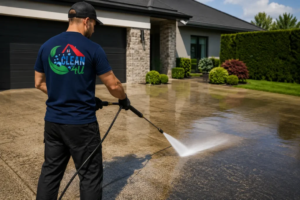
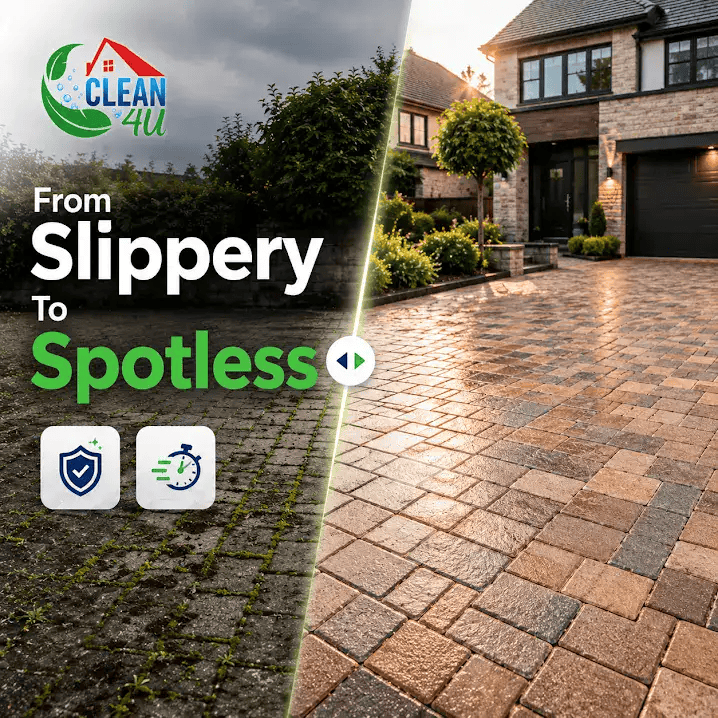
Grime builds slowly on outdoor surfaces until removal gets expensive. Well timed driveway pressure cleaning stops moss and staining early, suits every common surface from tarmac to resin, and works best alongside re-sanding and sealing.
Key Takeaways
- Moss and algae dig in long before a surface looks green.
- Booking driveway pressure cleaning on a schedule beats waiting for visible damage.
- Tarmac needs a gentler touch than concrete does.
- Washed joints want fresh kiln dried sand afterwards.
- Sealing stretches the time between cleans.
First impressions start at the Kerb, not the hallway. A stained entrance drags down an otherwise tidy property, and the marks rarely stop where they started. Sorting driveway pressure cleaning before grime beds keeps the whole frontage presentable. Cheaper that way too, since shallow dirt shifts fast and deep dirt fights back.
Irish weather never gives a surface much rest. Damp lingers through autumn, feeds the algae, then winter frost opens hairline gaps for it to spread into. Regular driveway pressure cleaning breaks that pattern while removal is still quick work. Wait two years and the same job needs stronger treatment and costs a good deal more.
Where the Rot Sets in First
- Damp Corners Do the Early Damage: Shade is where it begins. Water sits longer there and moss gets comfortable. A thin green film follows across the paving. That film turns lethal underfoot on frosty mornings. Below the surface, roots and spores are already working into joints and pores where an ordinary garden hose cannot reach them.
- Stains Grow Harder to Remove with Age: Oil, rust and tyre marks behave the same way. Fresh spills sit near the surface and lift with modest effort. Give them a season and they bond with the material itself, which means stronger treatments and longer dwell times, with patchy results a real risk once the work is finally done.
Breaking the Cycle That Feeds Moss and Weeds
- Twice a Year Keeps Trouble Small: Growth never gets going on a surface that sees proper attention each spring and autumn. Professional driveway pressure cleaning takes out spores before maturity and strips away the biofilm algae feed on. Weed seeds find nothing to anchor into. The result stays presentable for months rather than weeks, even through a wet Dublin winter.
- Small Habits Keep Costs Down: Regular attention protects the budget too. Deep staining and established moss demand extra time on site and stronger treatments. A short routine visit costs a fraction of a full restoration. It also removes the slip hazards that heavy growth creates near front steps and shaded entrances where falls happen most.
- Warning Signs Worth Acting On:
- A green or black film creeping out from shaded edges.
- Weeds in the paving joints.
- Water pooling where jointing sand has washed away.
- Oil shadows that stay visible long after the rain stops.
Concrete, Tarmac and Block Paving All Age Differently
- Hard Surfaces Still Need Careful Handling: Concrete tolerates firm pressure yet holds oil and rust in its pores, so stain treatment matters as much as the wash itself. Tarmac is softer. Hit it too hard and the binder washes out, taking loose stone with it. Controlled pressure at the correct nozzle distance leaves the surface intact.
- Decorative Finishes Deserve Gentler Methods: Jointing sand is what keeps block paving stable, and a careless blast strips it straight out. Blocks start rocking underfoot soon after. Sealed finishes on resin bound and pattern imprinted surfaces bring a different risk, since harsh jets can cloud or lift the coating. The method has to match the material every time.
Re-Sanding and Sealing Finish What the Wash Starts
- Fresh Jointing Sand Locks Paving in Place: Washing block paving flushes old sand from the joints along with the grime. Kiln dried sand goes back in afterwards to steady each block and shut the gaps weeds like to colonise. Paving left without it looks clean for a while, then starts moving and gapping within a season or two.
- Sealing Buys Years of Easier Maintenance: Once a surface is properly clean, sealant is worth serious thought. It soaks in and sets up a barrier that keeps oil sitting on top instead of sinking through. Sealed surfaces fade slower under sunlight. Moss finds less to grip. The gap between washes stretches out, which repays the cost several times over.
Kerb Appeal Worth Coming Home To
Nobody plans to let a driveway slide. It happens gradually, one wet month at a time, until the fix costs real money. Acting while marks sit near the surface is the cheap version of this job. Get a quote from a trusted local cleaning team and let the frontage make its own good impression again.