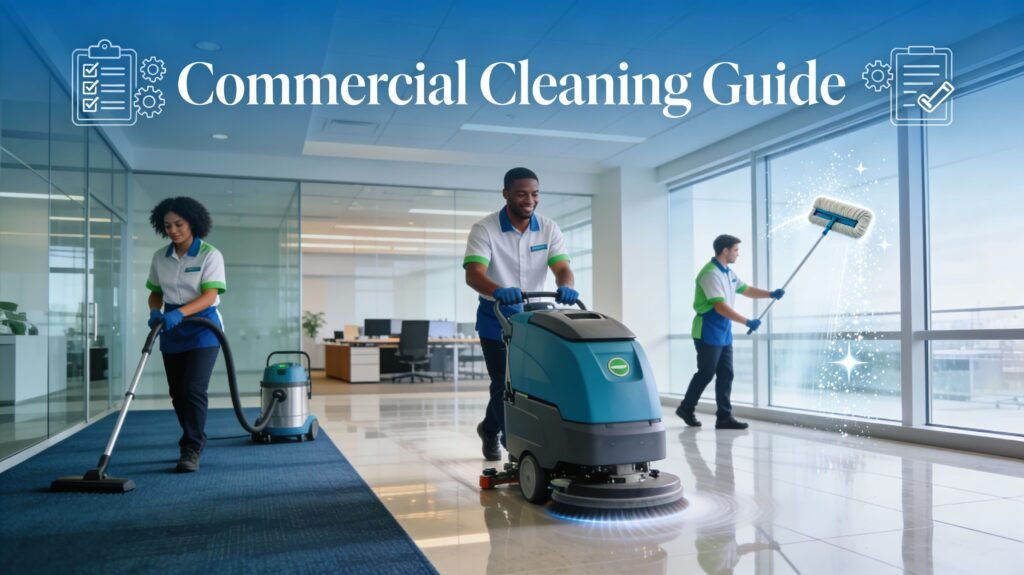
Let’s be honest—you want a workspace that stays clean and feels safe, not just for appearances but because it helps your team get things done. Here’s how commercial housekeeping services can make that happen—delivering results you can actually rely on, whether you need daily tidying or the occasional deep clean. With a professional cleaning service, your facility stays healthy, presentable, and business-ready, thanks to clear schedules, thoroughly trained staff, and standards you can measure. It’s just one less thing to worry about.
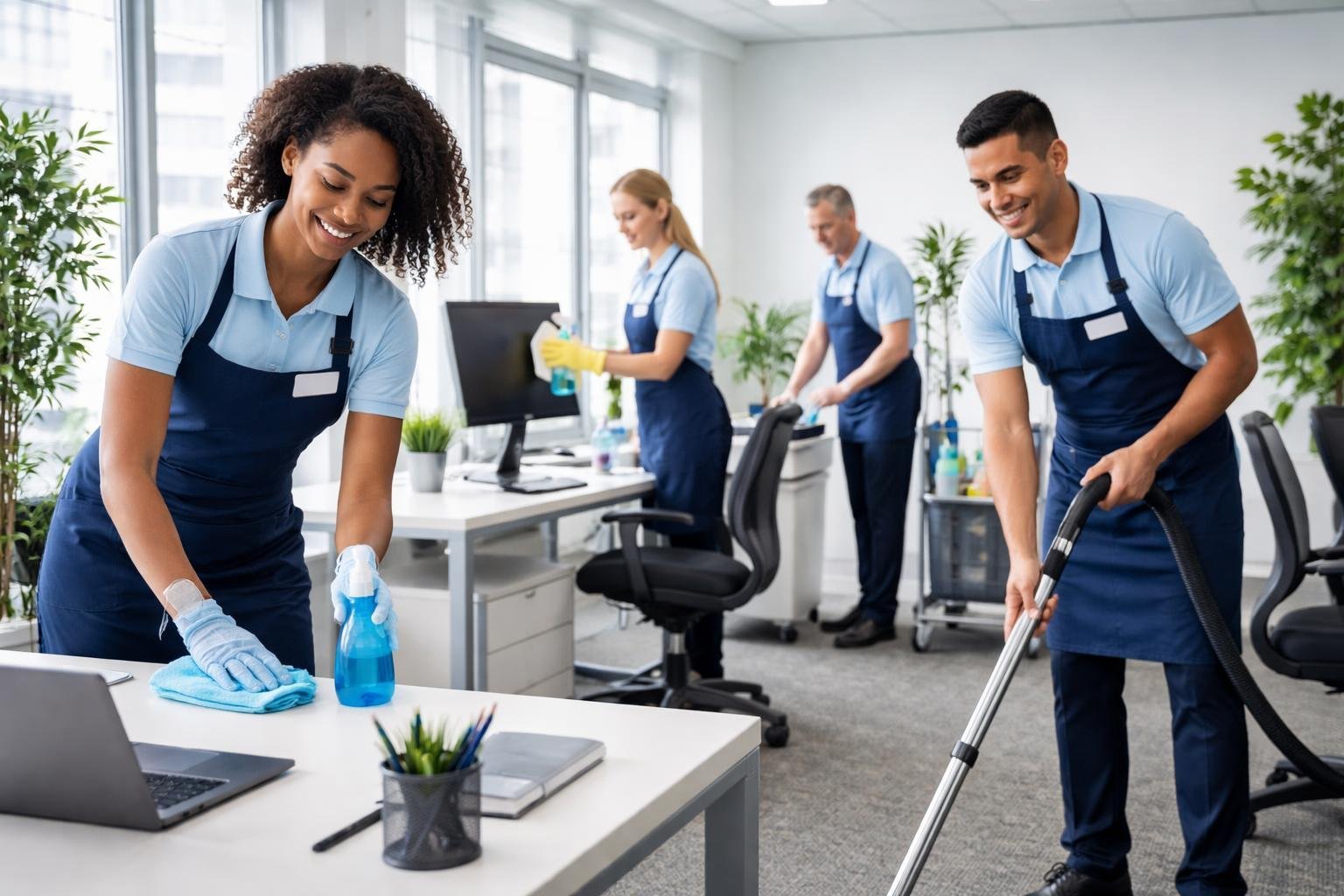
We’ll walk you through the essentials: what these services include, the different specialties out there, and how to actually choose a commercial cleaning partner that makes sense for you. Plus, a bit on building a contract, tracking performance, and keeping quality from slipping—so your investment keeps on delivering.
Core Features of Commercial Housekeeping Services
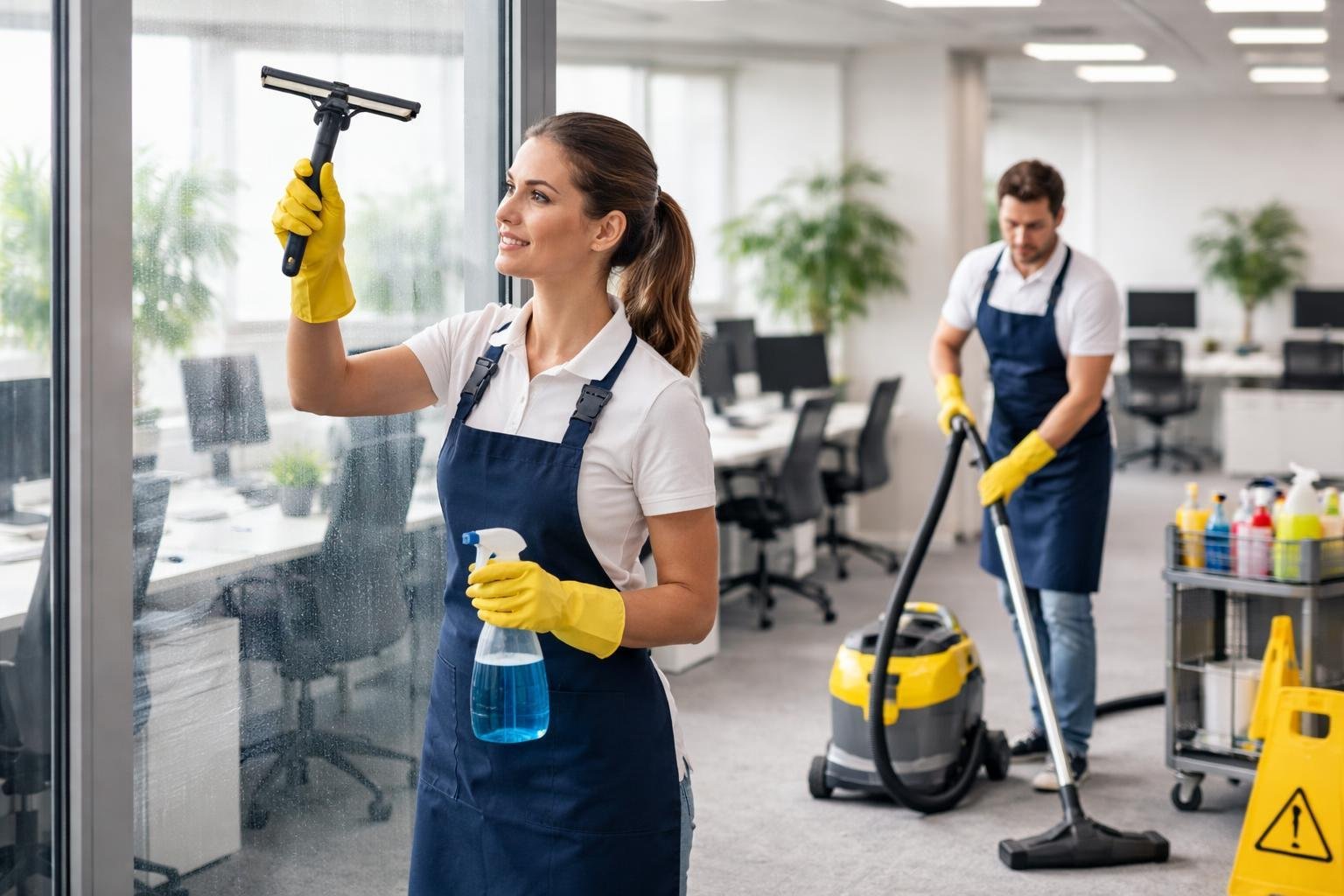
Let’s break down what commercial cleaning teams actually do, the tangible benefits they bring, and how their approach shifts depending on the industry. It’s not just about looking nice—cleaner spaces are safer and just work better, full stop.
Scope of Commercial Cleaning Tasks
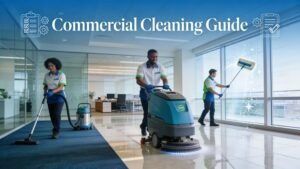
We handle the daily janitorial grind as well as those bigger, specialized jobs. Think: vacuuming, mopping, emptying bins, dusting, sanitizing restrooms, and making sure things like soap and paper never run out. We’re also all over high-touch stuff—door handles, switches, shared gear—to help keep germs from bouncing around.
Then there are the periodic and specialist tasks. Deep cleans, carpet and floor restoration, window washing, rope-access work, graffiti removal—you name it. We’ve got the gear (scrubbers, HEPA vacuums) and we follow all the safety rules, especially in regulated spaces.
Want regular schedules? Or maybe flexible shifts? No problem. Our staff are background-checked, we handle all the supplies, and our reporting tools keep you in the loop about what got done and when.
Benefits of Professional Cleaning Service
We boost workplace hygiene and help cut down on sick days by hitting those high-touch zones hard. Plus, keeping floors dry and tidy lowers the risk of slips and falls—nobody wants a workplace accident if it can be avoided.
Your brand gets a lift too—public areas stay sharp, and our trained staff stick to checklists and audits. Outsourcing cleaning also saves you the headache of hiring, scheduling, and buying supplies. It’s just simpler.
We’re big on quality control—digital reports, KPIs, customer portals. You can see what’s been done, any issues, and even inventory levels in real time. It’s transparency you can actually use.
Tailored Cleaning Solutions for Different Industries
We tweak our approach and products for each industry. Offices get extra attention on desks, meeting rooms, and kitchens—lots of touchpoint cleaning and waste management. Retail and hospitality? We polish the front of house, keep restrooms spotless, and make sure guest areas always look their best.
For regulated industries like healthcare or food processing, we follow strict procedures (GMP/HACCP standards), use certified cleaning agents, and do documented deep cleans. Industrial sites and data centers get specialized floor care, dust control, and scheduled shutdown cleaning from trained techs.
The scope of work and schedules aren’t cookie-cutter—we match them to your traffic, safety requirements, and audit needs. That way, cleaning fits right in with your operations and compliance rules.
Types of Commercial Cleaning Specializations
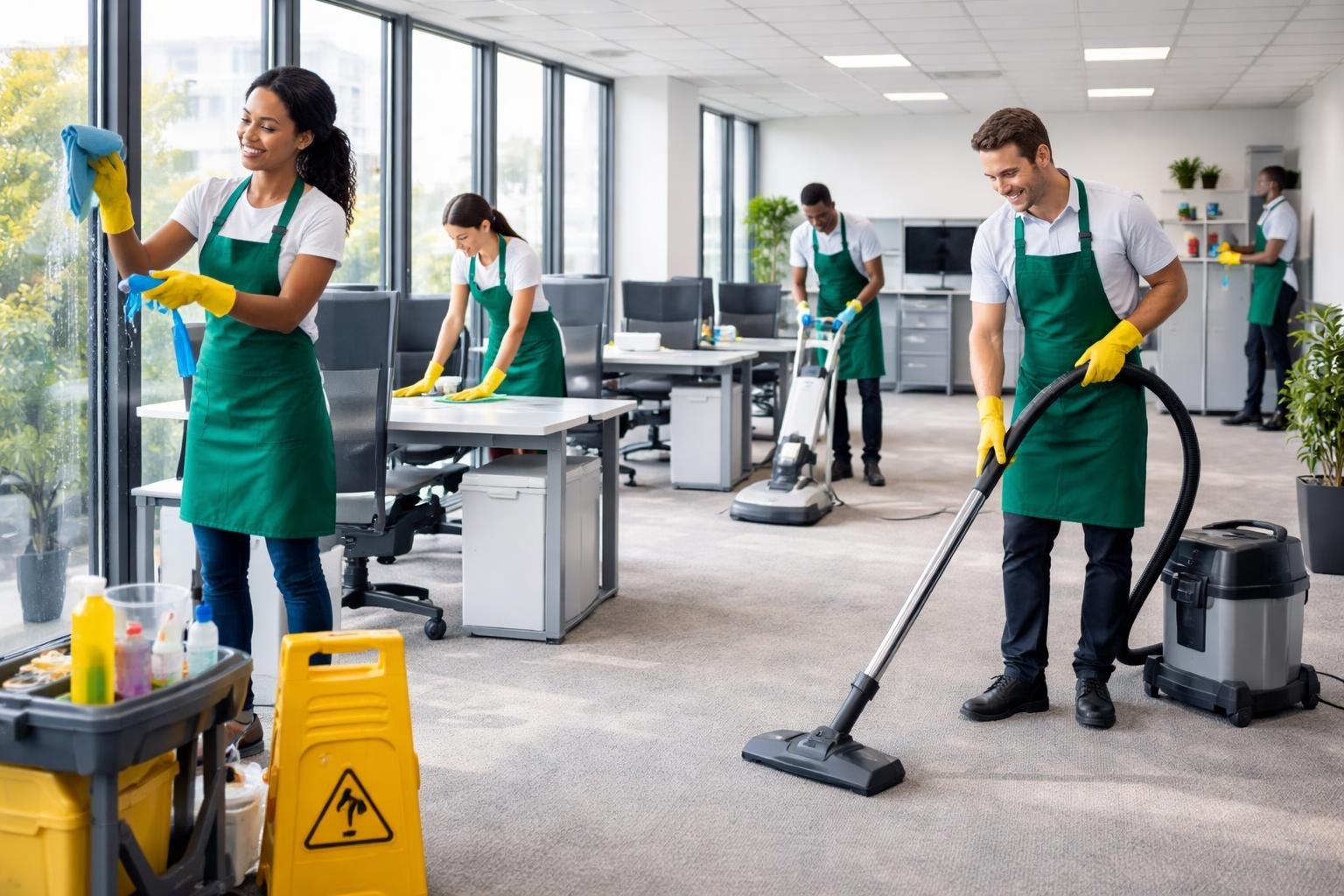
It’s all about matching the right cleaning tasks to your facility—protecting your assets and meeting safety standards. Each service blends scheduled routines, specialized tools, and a well-trained crew for results you can count on.
Office Cleaning
We keep workspaces tidy, healthy, and inviting for everyone. Our routine office cleaning covers dusting desks and shelves, emptying bins, vacuuming carpets, and mopping hard floors. We’re diligent about daily disinfection of high-touch spots—keyboards, phones, handles, switches—because, well, germs are everywhere.
We handle consumables too: paper towels, soap, toilet paper, all restocked as needed. For a deeper clean, we offer periodic extras like carpet extraction, upholstery cleaning, and floor buffing. Schedules are flexible—nightly, after hours, or during business hours with as little disruption as possible. And yes, we follow access rules and keep sensitive areas secure.
Industrial Cleaning Solutions
Industrial spaces need a different touch. We take on heavy-duty cleaning for warehouses, factories, and production lines—sweeping, power-scrubbing, degreasing machinery, clearing dust from vents and high spots.
We use the right tools—industrial vacuums, scrubbers, approved degreasers. Confined spaces, chemical spills, hazardous waste? Certified staff only, following OSHA and local rules. We coordinate with your team on shutdowns and lockout/tagout procedures to keep everyone safe. Regular cleaning helps your equipment last longer and reduces fire and slip risks. Makes sense, right?
Window Cleaning Services
Want your windows to actually sparkle? We can help with that—inside and out, frames and sills, whether it’s a low-rise or a high-rise. We use water-fed poles, squeegees, and pro-grade detergents for streak-free glass on storefronts and office buildings alike.
For the tall stuff, we bring in rope access, platforms, or lifts—always with trained, insured techs. We’ll clean window tracks, and if you want, apply protective coatings. How often? That’s up to you—monthly, seasonally, whatever fits your standards. We document work with photos and access logs, so you’re never left guessing.
Choosing a Professional Commercial Cleaning Company
When picking a cleaning company, we look for proof: real training, proper insurance, and eco-friendly options. If a company can’t check those boxes, it’s probably not a fit for our standards of safety, quality, or long-term value.
Credentials and Certifications
We always check that a cleaning company has the right certifications. Look for ISO 9001 for quality, or ISSA/CIMS for cleaning management—they show the company follows real procedures and gets audited regularly.
Ask about staff training—do they have certifications for carpet care, floor finishing, disinfection, and so on? Make sure techs get on-site training and refreshers. Don’t be shy about asking for proof or a summary of their training topics.
It’s also worth checking industry memberships and vendor certifications for their chemicals and equipment. Memberships mean they’re keeping up with best practices; vendor certs mean they know how to use their gear safely and effectively.
Insurance and Liability Protection
Insurance is a must—no exceptions. At minimum, a cleaning company should carry general liability and workers’ comp. That way, if something goes wrong (property damage, injury), you’re protected.
Ask for policy limits and get a certificate of insurance naming your business as an additional insured. This gives you direct coverage if there’s ever a claim on your premises. Double-check that the policy’s current and ask how claims get handled.
Bonding matters too—it covers you if an employee steals or causes a loss. Ask about their damage reporting process, how fast they respond, and whether they cover replacement or repair costs. It’s better to know upfront than be surprised later.
Sustainable and Eco-Friendly Practices
We put a premium on companies that can show real green practices and share their product lists. Ask for brand names and safety data sheets for the cleaning stuff they use. Companies using EPA Safer Choice, Green Seal, or similar products? That’s a good sign.
Check their equipment too—HEPA vacuums, microfiber cloths, anything that cuts down on dust and chemical use. Low-moisture floor cleaning is a plus, since it means less downtime and fewer chemicals.
Get a copy of their waste and recycling policy. A solid commercial cleaning provider will show you how they cut single-use plastics, handle chemical disposal, and keep stuff out of the landfill. Ask how they track and report environmental improvements for your site. It’s not just talk—it should be written down.
Customizing a Cleaning Service Contract
When it comes to contracts, clarity is key—what’s covered, how much it costs, and who’s responsible for what. The contract should spell out the tasks, set the schedule, list the fees and penalties, and cover liability and access rules, so there are no surprises.
Defining Service Scope and Frequency
We get specific about every task—sometimes even room by room. For example: “Lobby—dust all surfaces, mop the floor, empty bins. Conference rooms—vacuum, clean glass. Restrooms—sanitize everything, refill supplies.” We also make a note of what’s not included, like carpet shampooing, high-window washing, or hazardous material cleanup. That way, everyone’s on the same page.
Frequency matters too: maybe it’s every Monday 6–9 a.m., every other Friday, or a deep clean the first Wednesday of each month. We sometimes specify how many staff and for how long: two cleaners for three hours, or one per 2,000 sq ft. It helps avoid scope creep and keeps planning straightforward.
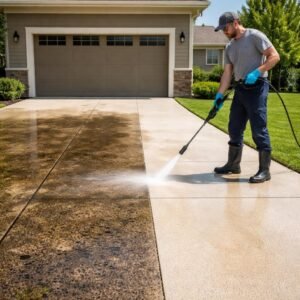
We add acceptance criteria—what “clean” actually means (no visible dirt, streak-free floors), plus a window for reporting any issues (like, let us know within 48 hours). Optional add-ons with set prices let you request carpet cleaning, pressure washing, or specialty services without renegotiating everything.
Payment Terms and Scheduling
We lay out the pricing: per visit, per square foot, or monthly flat rate. If it’s per visit, we say how much and how many visits. For big projects, we break out milestones, deliverables, and payment percentages.
We specify how to pay and when: net 15 by ACH, credit card, or monthly invoice due on the 1st. Late fees? Yep—maybe 1.5% per month after 30 days. There’s usually a deposit too—often one month’s fee or a nonrefundable onboarding charge for the initial deep clean.
If you need to change the scope or timing, we explain how to request it, how much notice is needed, and how we’ll adjust charges. We also cover what happens around holidays and make-up visits, so payments and service never catch you off guard.
Key Considerations for Service Agreements
We always include liability limits and insurance details—it’s essential to confirm that the commercial cleaning company actually carries general liability, and we spell out minimum coverage. We also clarify who’s responsible for any pre-existing damage and outline how to handle claims, right down to how soon damage must be reported and what kind of proof is needed.
We cover access and security rules, too: who gets keys, how alarms are handled, and what to do after hours. If a site is sensitive, we require background checks for assigned staff and get specific about confidentiality expectations.
Termination and notice terms are another must. We set out how much notice is needed (30 days is pretty standard), any early-termination fees, and exactly what situations allow for immediate cancellation—like safety problems or nonpayment. There’s also a renewal clause and a clear process for price increases, usually tied to annual CPI or a fixed percentage, with at least 30 days’ warning.
How to Evaluate and Maintain High Standards
We try to set clear expectations, measure results, and use tools that make inspections objective and repeatable. Responsibilities are assigned, performance data is tracked, and we actually act on feedback to keep standards up.
Quality Assurance Methods
Written SOPs and checklists help keep things consistent across sites. Each task has its frequency, the materials needed, and what “good enough” looks like, so every cleaner from a commercial cleaning company is following the same basic playbook.
Inspections are scheduled daily, weekly, and monthly. Supervisors use a straightforward scoring system (Pass/Fail or 1–5) and document any misses with photos and timestamps. Simple, but it works.
We connect inspections to accountability. Zones are assigned to individuals, and if something’s missed, we take steps—retraining, shift tweaks, or more follow-ups. We keep an eye on KPIs like pass rate, rework rate, and on-time completion to spot patterns and help teams improve.
Technology and Innovative Cleaning Solutions
Mobile inspection apps let us log results in real time. They make it easy to attach photos, map out zones, and export reports, which speeds up fixes and cuts down on paperwork.
We’re always looking for better machines and tools—ride-on scrubbers, HEPA vacuums, microfiber systems—that help with consistency. These save labor and just work better, especially on floors and carpets.
We add touchless dispensers and electrostatic sprayers where it makes sense. These cut down on cross-contamination and give us measurable coverage. Sensor-based trash and restroom monitors help us clean when it’s really needed, not just on a fixed schedule.
Feedback and Continuous Improvement
We ask for feedback from tenants, facility managers, and cleaning staff—quick surveys, incident reports, whatever works. There’s a process: log the issue, assign someone, resolve it within a set SLA, and close it out with a double-check.
We hold regular review meetings to go over inspection data, client feedback, and equipment uptime. That info drives updates to SOPs, retraining schedules, and even tweaks to staffing or supplies.
Consistent performance doesn’t go unnoticed—there’s recognition or bonuses tied to KPIs. It keeps teams motivated and in line with what a professional cleaning services provider should deliver.
Frequently Asked Questions
We lay out the exact tasks, scheduling choices, what drives pricing, quality checks, how we hire and train staff, and what supplies or green options we can bring. Check each answer for clear limits, responsibilities, and what timelines to expect.
What tasks are typically included in a professional cleaning scope for offices and facilities?
We handle common areas, restrooms, break rooms, private offices, and conference rooms. That usually means trash removal, vacuuming, sweeping, mopping, dusting, wiping high-touch spots, and sanitizing restrooms.
We also take care of periodic jobs like carpet shampooing, hard-floor stripping and finishing, window cleaning, and deep kitchen cleaning. Everything’s listed in the written scope, so there’s no confusion about what’s done each visit.
How are cleaning schedules customized for different industries and occupancy levels?
We set frequency based on how much traffic and risk there is. A quiet office might just need a couple of visits a week, but medical or busy retail sites often need cleaning daily or even multiple times a day.
Timing gets adjusted to avoid disrupting anyone. Many clients want after-hours service, but some need daytime cleaning with tasks staggered so operations aren’t interrupted.
What factors influence pricing, and how are quotes and contracts typically structured?
Pricing depends on square footage, the list of tasks, frequency, any special services (like floor finishing), and site access needs. Nights, weekends, or urgent requests add to the cost.
Quotes are itemized, showing task lists, frequencies, and a monthly or per-visit price. Contracts are usually month-to-month with a 30-day cancellation clause, or fixed-term for scheduled specialty work.
What quality-control processes ensure consistent results across multiple visits or sites?
We use written checklists for each site and visit. Supervisors do regular inspections and log anything that needs fixing.
We track problems with a ticket or work-order system and report back to clients when things are done. Regular reviews and the occasional anonymous spot check help keep standards up.
How do providers screen, train, and supervise staff to meet safety and compliance requirements?
We run background checks and verify work eligibility before bringing anyone on board. New hires go through orientation covering safety rules, PPE, and chemical handling basics.
Ongoing training covers equipment, cleaning techniques, and anything specific to the client. Supervisors do ride-alongs and performance reviews to make sure everyone’s on track.
What supplies, equipment, and eco-friendly options are available, and who provides them?
We usually bring all the standard tools, machines, and cleaning chemicals—unless, of course, you’d rather use your own. If you need consumables like paper products, we can add those for an extra fee (just let us know ahead of time).
For folks interested in greener options, we’ve got things like EPA-listed disinfectants, microfiber cloths, and products with low VOCs. If you’re curious about our green certifications or want to see Material Safety Data Sheets, just ask—we’re happy to share.