The Future of Guest Satisfaction: How AI and Autonomous Robots Are Elevating Hospitality Cleaning Standards

Commercial-Hospitality-Cleaning-Dublin

In the luxury hospitality market, cleanliness is no longer a hidden, back-of-house utility. It has evolved into a primary driver of digital reviews and guest sentiment. Today, a five-star cleanliness rating is a baseline requirement; a single piece of debris or a poorly maintained carpet can instantly trigger a negative online review that costs far more to recover from than it would have cost to prevent.

For hotel owners and property managers, maintaining these flawless standards manually has become an operational and financial hurdle. Rising labour shortages, strict compliance rules, and the relentless demand for rapid room turnovers are forcing a fundamental shift in how properties approach environmental health.

The solution is not simply hiring more personnel; it is changing the operational model entirely. By integrating artificial intelligence and autonomous cleaning robots, forward-thinking venues are establishing a new benchmark for automated precision. This approach protects physical assets and delivers the spotless experience that modern travellers demand. For Dublin hospitality venues that want to understand how this technology complements rather than replaces professional human cleaning teams, our hospitality cleaning service Dublin already integrates many of these advanced operational protocols.

1. Beyond Generic Automation: High-Value Cleaning Niches That Are Robot-Ready

Many property managers view robotic cleaning as nothing more than an automated vacuum running across a lobby floor. However, true operational efficiency occurs when autonomous systems are deployed into specialised, high-stakes cleaning niches. Three distinct phases define the post-construction and pre-opening cleaning sequence in hospitality:

After-Builders Clean

Focuses on the heavy, industrial removal of construction dust, hazardous drywall residue, and leftover materials following a renovation or new property opening.

Snag Cleaning

The transition phase where autonomous units equipped with high-resolution computer vision run diagnostic checks, systematically scanning and logging physical snags.

Sparkle Clean

The final aesthetic polish that gives surfaces a move-in-ready shine immediately before the first guest arrives.

Luxury hospitality has also adopted sanitisation standards once reserved for healthcare environments. Implementing medical-grade cleaning protocols and HACCP-compliant hygiene systems in public lounges, communal areas, and kitchens is now essential for safety. Autonomous systems excel here, executing precise chemical applications and UV-C disinfection cycles that guarantee consistent, measurable pathogen reduction.

2. Technical Variables: Designing a Robot-Ready Hospitality Environment

Deploying autonomous systems involves more than unboxing a unit and pressing start. A property's physical and ambient environment must be assessed against specific operational variables.

Moisture and Sensor Management

One critical technical variable is humidity and liquid control. When floor scrubbers use traditional, overly saturated washing methods, excess moisture can pool on surfaces. This standing water distorts the LiDAR and infrared sensors of autonomous units, leading to navigation errors or unexpected shutdowns. Furthermore, slow-drying floors create immediate slippage risks in public corridors.

Transitioning to advanced, rapid-extraction autonomous scrubbers ensures fast-drying performance, keeping sensors clear and allowing public walkways to remain open safely throughout the cleaning cycle.

Material Adaptation Across Property Zones

A luxury property contains a complex mix of materials, from durable stone facades and outdoor tarmac to delicate interior leather, custom wood trims, and soft furnishings. Autonomous equipment must adjust its operational pressure and chemical distribution based on the surface it encounters:

Tarmac and Stone Exteriors

Require heavy power washing, graffiti removal, and chewing gum grinding machinery.

Delicate Interior Textiles

Require low-moisture steam, in-situ care, and Scotchgard protection to avoid fabric damage or room downtime.

Public Entrances and Receptions

Require continuous, low-noise debris removal to preserve a welcoming atmosphere.

High-Traffic Corridors and Lifts

Demand compact robotic footprints that navigate tight architectural constraints without blocking guest pathways.

Back-of-House Areas

Require specialised navigation tracking to handle tight turning radii and variable lighting conditions in stairwells and communal bin stores.

3. The Collaborative Cleaning Model: Humans and Robots Working Together

Autonomous cleaning does not eliminate the need for human staff; it reallocates labour so that both machines and humans perform the tasks they are best suited for. This human-in-the-loop model ensures that industrial-grade tasks are completed consistently, freeing up human specialists for the final aesthetic touches that drive positive guest reviews.

Manual Carpet Extraction Industrial-grade robotic extractors

Run during low-occupancy hours using low-moisture, fast-drying methods.

Result: zero room downtime, carpets are clean and dry before check-in.
Manual Lobby Scrubbing Autonomous scrubbers

Map and maintain lobby floors continuously, adapting dynamically to flexible operational hours.

Result: continuous cleanliness without disrupting guests.
Manual Hallway Vacuuming Compact robotic units

Continuously clear corridors and lifts using low-noise configurations.

Result: consistent debris removal with minimal auditory disruption to sleeping guests.
Manual Entrance Sweeping Exterior autonomous units

Handle targeted power washing, including chewing gum and graffiti removal.
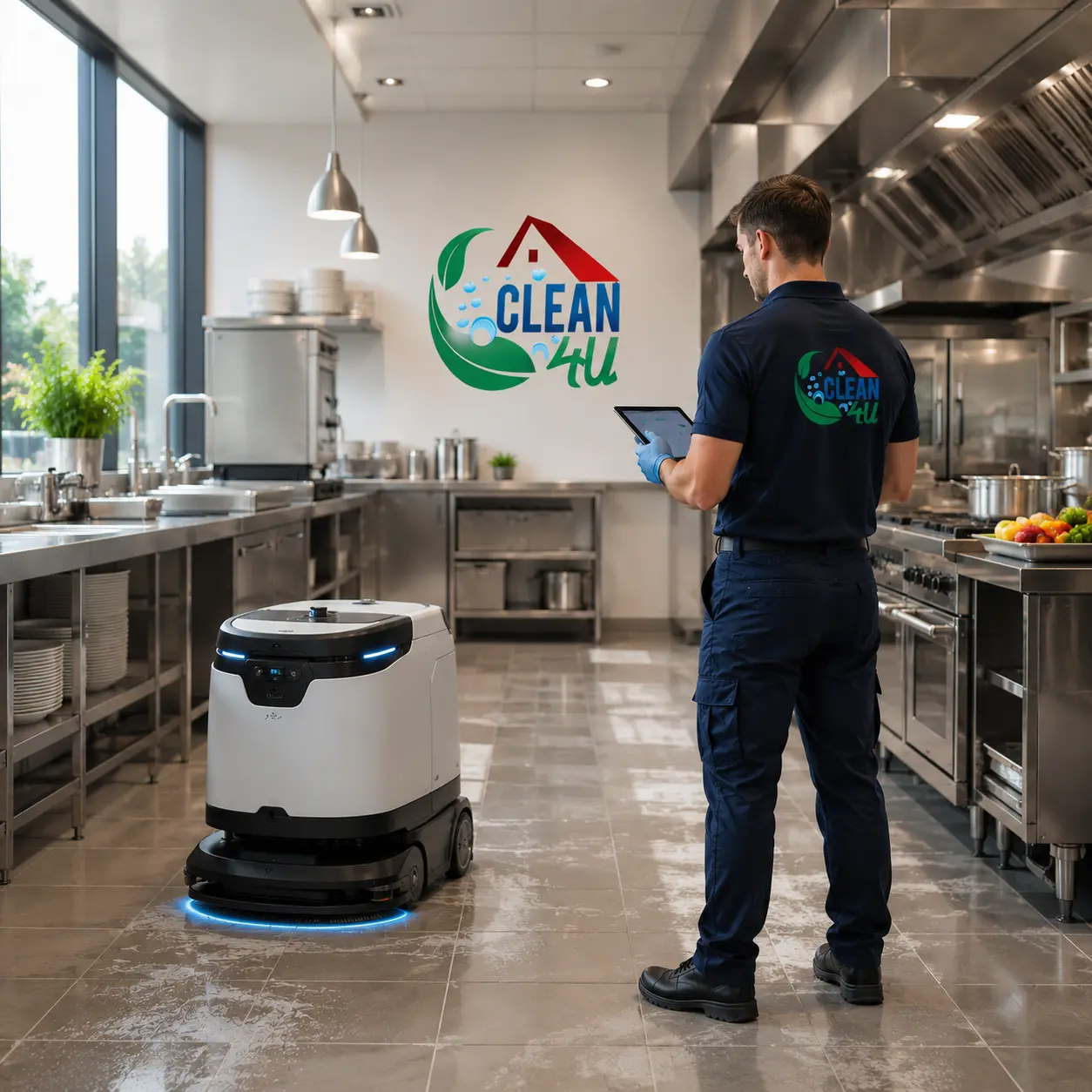
Result: a preserved exterior first impression without requiring dedicated external crews.
Clean4U Automated Hospitality Cleaning Workflow Transformation

Modern automated cleaning is coordinated through centralised, AI-driven management software platforms. If a robot encounters an obstacle it cannot resolve, or if a human team member is absent, the platform automatically triggers alert notifications and adjusts staff scheduling, guaranteeing uninterrupted service around the clock. For Dublin hospitality venues managing multiple cleaning contracts simultaneously, our cleaning contractors Dublin service provides the same level of managed, accountable oversight across all property zones.

4. Asset Protection and Long-Term ROI

The financial justification for automated cleaning goes beyond reducing immediate labour hours. A significant return on investment comes from extending the lifespan of your property’s interior assets.

When carpets, delicate upholstery, and mattresses are cleaned inconsistently, embedded grit acts like sandpaper, degrading fabric fibres under foot traffic. Replacing these furnishings requires substantial capital expenditure. An automated, data-driven maintenance routine mitigates this wear through four key mechanisms:

Deep Extraction and Protection

Autonomous extractors thoroughly remove deeply embedded soil and evenly apply protective treatments like Scotchgard fabric protector, extending the operational lifespan of expensive commercial carpets and upholstery.

In-Situ Curtain Maintenance

Specialised tools clean drapes safely while they hang, eliminating the fabric strain and room downtime caused by taking them down for off-site laundering.

Mattress Sanitisation

Programmed deep cleaning extracts micro-allergens and dust mites, protecting guest health and keeping expensive bedding in service longer.

Scotchgard Application

Even, automated application of fabric protectant creates a consistent stain shield across high-contact seating and carpeted areas, dramatically reducing the frequency of emergency spot treatments.

For Dublin hospitality venues that also manage guest room upholstery and soft furnishing maintenance, pairing your automated cleaning programme with a professional upholstery cleaning service ensures that premium seating, headboards, and fabric fixtures receive the specialist care that robotic systems alone cannot provide.

5. The 5-Star Hospitality Hygiene Checklist

Use this operational audit checklist across all property zones to ensure your venue meets the highest standards of cleanliness and compliance:

High-Touch Disinfection

Perform continuous sanitisation of high-contact surfaces, including door handles, light switches, and lift buttons.

Aesthetic Polishing

Complete a thorough Sparkle Clean finish across all public glass, mirrors, and metal fixtures to eliminate smudges.

Asset Restoration

Schedule deep upholstery restoration for lobby furniture and routine mattress sanitisation in guest rooms.

Specialised Fabric Care

Run in-situ curtain vacuuming and even applications of Scotchgard protectant on high-traffic carpets and sofas.

Kitchen Hygiene

Scrub all commercial food preparation spaces, sinks, and extraction vents to verify full compliance with HACCP standards.

Exterior Maintenance

Deploy power washing equipment to clear main entrance pathways, focusing on graffiti and chewing gum removal.

6. Frequently Asked Questions

Will autonomous cleaning robots disrupt our guest experience?
No. Advanced commercial robots operate with low-noise electric motors and use fast-drying, low-moisture cleaning techniques. Management platforms schedule these machines during off-peak hours, such as late-night lobby refreshes or daytime corridor sweeps during check-out windows, ensuring minimal disruption to guests.
Can robots handle the final detail required for 5-star reviews?
Robots excel at repetitive, large-scale tasks like deep carpet extraction and open-floor scrubbing. They are not designed for intricate detail work. In a professional framework, robots handle the heavy lifting, allowing human cleaning specialists to focus on the nuanced detail work and final quality control checks that directly drive positive guest reviews.
How can property managers ensure operational reliability if a machine fails?
By using centralised management platforms that provide automatic backup coverage. If a machine requires maintenance or an unexpected service interruption occurs, the system flags the issue instantly and reallocates resources or schedules a trained technician to maintain uninterrupted service.
What professional standards validate these autonomous cleaning protocols?
High-quality robotic cleaning programmes align with recognised industry benchmarks including BICSc training standards, NCCA carpet care guidelines, and HACCP food safety compliance protocols for commercial hospitality kitchens and dining facilities.
How does AI-managed cleaning benefit small Dublin hospitality venues, not just large hotels?
AI-managed cleaning platforms scale to any property size. For small boutique hotels, guesthouses, and Dublin restaurants, centralised scheduling software means even a small team can maintain inspection-ready hygiene standards across every zone without requiring constant managerial oversight. Our commercial cleaning contractors Dublin work with venues of all sizes to implement structured, accountable cleaning programmes that protect guest satisfaction scores year-round.

7. Professional Standards and Reference Sources

BICSc — British Institute of Cleaning Science — The benchmark for mechanical safety, chemical competence, and standardised operational workflows in commercial cleaning environments.
Section 6 — FAQ 4 mein: Word: “BICSc training standards 

NCCA — National Carpet Cleaners Association — Establishes correct fibre identification, pile restoration protocols, and safe moisture extraction boundaries for commercial carpet care.Section 6 — FAQ 4 mein: Word: “NCCA carpet care guidelines 

Health and Safety Authority Ireland (HSA) Section 2 — “Moisture and Sensor Management” on : Word: “slippage risks in public corridors” Link: https://www.hsa.ie/

Irish Accommodation Services Institute (IASI) Section 3 — “Collaborative Cleaning Model” on : Word: “HACCP-compliant kitchen deep clean” Link: https://www.iasi.ie/