For Dublin businesses, the physical workplace is a direct reflection of corporate governance, operational excellence, and brand equity. Yet one of the most critical capital expenditures in any commercial facility is frequently treated as a minor janitorial afterthought: the carpet.
Whether you manage a high-rise tech hub in the Silicon Docks, a bustling retail venue in Dublin City Centre, or a healthcare suite in Blanchardstown, your flooring is under constant assault. Viewing carpet maintenance as a reactive chore, waiting until visible stains appear, is a costly financial mistake. By the time dirt is visible to the naked eye, deep-seated fibre degradation is already well underway.
Shifting from a reactive once-off mindset to a proactive, scheduled operating expense model is a high-yield asset management strategy. Here is how implementing a scheduled commercial carpet cleaning programme actively protects your bottom line, extends asset lifespans, and safeguards your business operations across Dublin.
In a competitive commercial market like Dublin, property valuation and tenant retention are tied directly to how well a facility is maintained. A neglected floor finish does not just hurt aesthetics. It rapidly accelerates depreciation and signals operational neglect to clients, tenants, and inspectors alike.
Different sectors across the Dublin region face unique operational demands, requiring bespoke preservation strategies to protect their property investments:
These spaces require impeccable maintenance standards to foster worker productivity, optimize indoor air quality, and uphold high-value tenant profiles.
Luxury spaces rely on spotless, uniform flooring to maintain global brand reputations and ensure guest satisfaction from the first step.
Operations with extreme, concentrated footfall treat carpet maintenance as a core risk management function to preserve heavily trafficked surfaces.
Clinical environments require rigorous sanitization to comply with Health and Safety Authority standards and eliminate respiratory risks.
Facilities caring for vulnerable occupants prioritize non-toxic, eco-friendly deep cleaning to manage biological contaminants safely.
According to the Health and Safety Authority Ireland, maintaining healthy indoor air quality in commercial workplaces is a legal obligation for all Irish employers. Scheduled carpet maintenance is one of the most effective engineering controls available for reducing airborne allergens, volatile organic compounds, and biological contaminants trapped within commercial flooring.
The financial logic of a scheduled maintenance contract rests on an elegant budgetary shift: converting unpredictable, multi-thousand-euro capital replacement costs into a manageable, predictable operating expense.
When grit and soil are allowed to accumulate, they sink to the base of the carpet pile. Under the weight of daily foot traffic, these sharp, microscopic particles act like sandpaper, grinding against the synthetic fibres until they snap. This irreversible thinning creates permanent traffic lanes that no amount of cleaning can fix, forcing premature and highly disruptive carpet replacement.
Here is how the two approaches compare operationally:
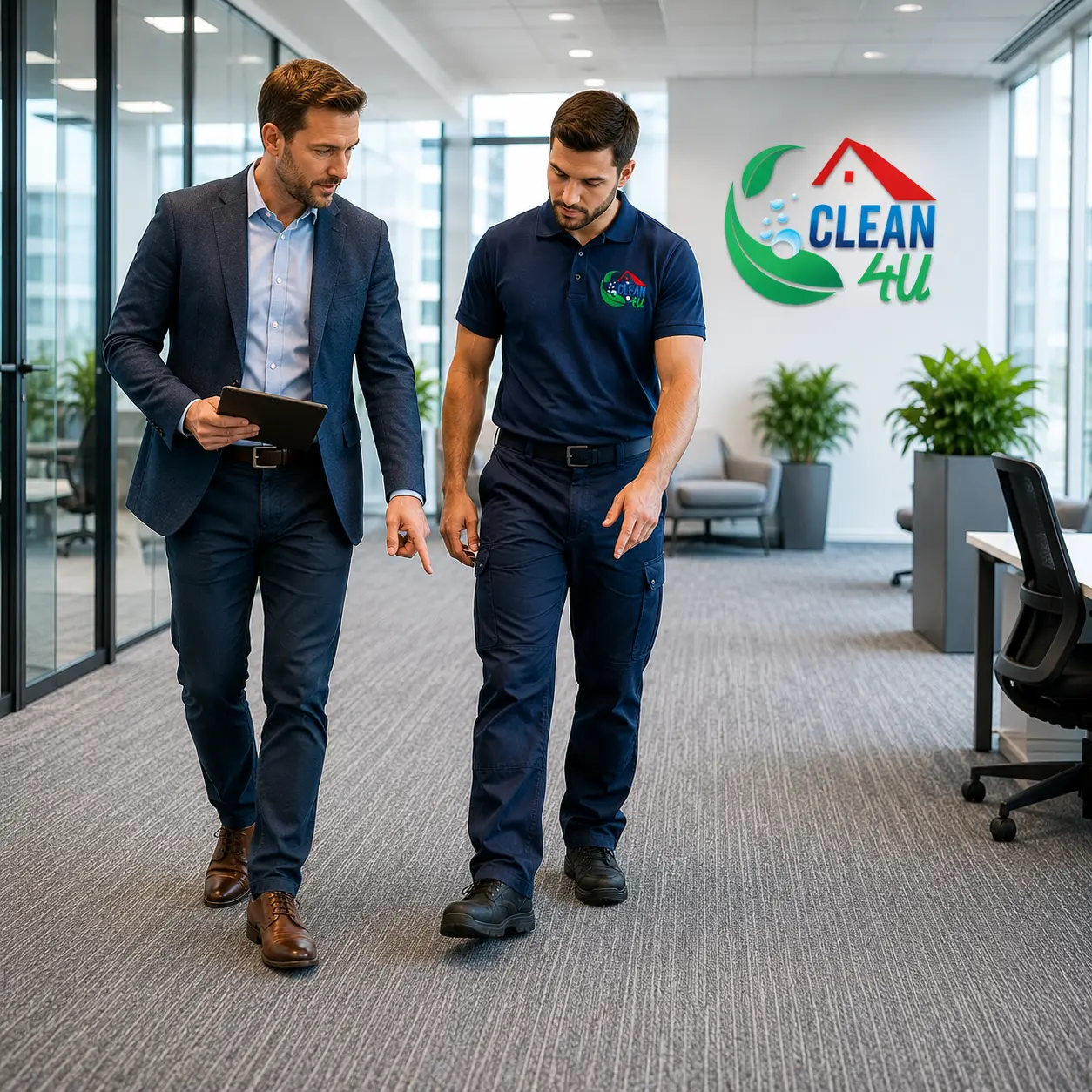
For Dublin office managers overseeing multiple facility zones, pairing your carpet maintenance programme with a broader office cleaning Dublin contract ensures every element of your workplace environment is maintained to a consistent, inspection-ready standard under a single managed agreement.
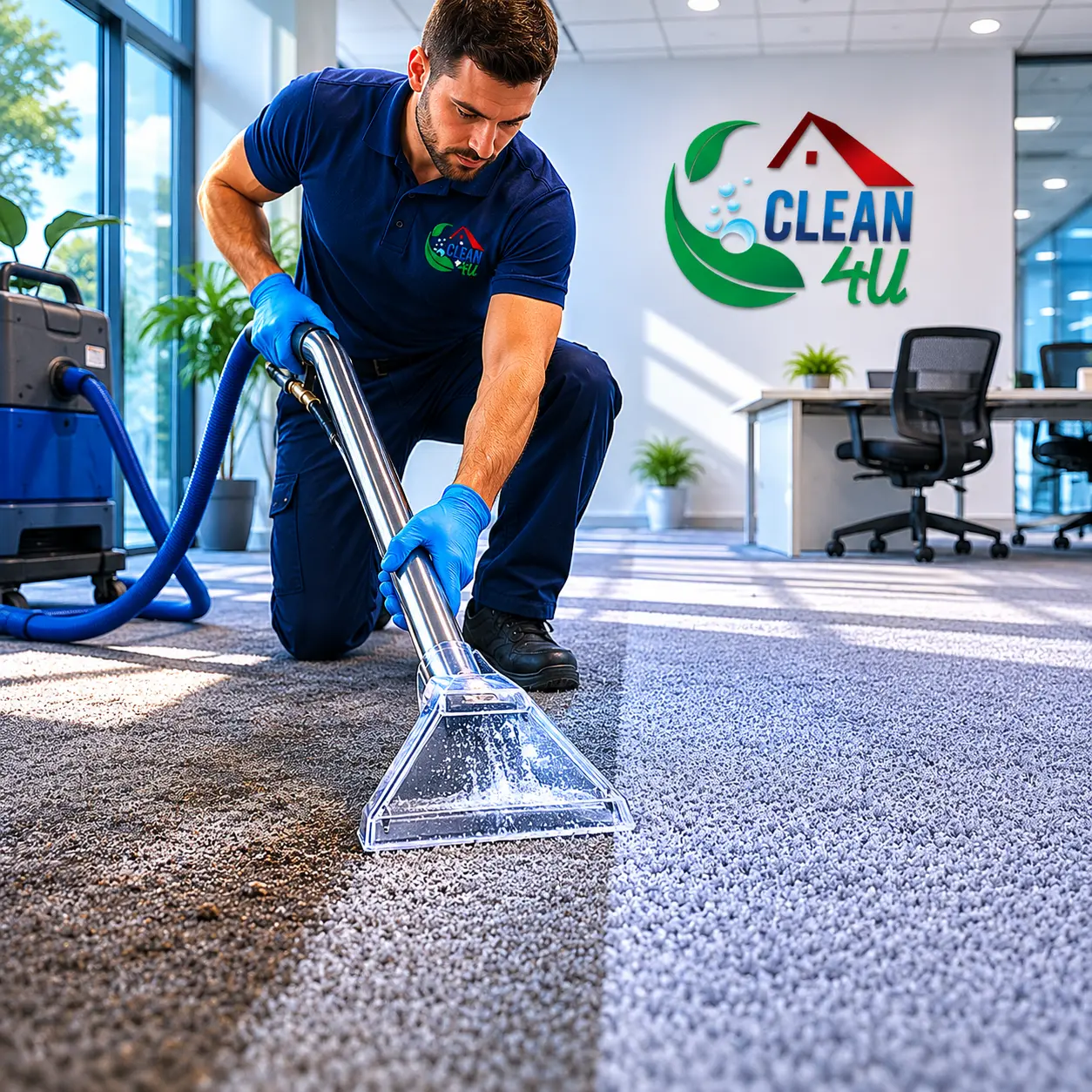
Achieving a true return on investment requires specialized workflows that go far beyond standard vacuuming or budget cosmetic cleaning. Advanced cleaning protocols rely on a precise four-stage scientific sequence to restore and protect commercial carpet fibres:
Specialized counter-rotating rubber brushes and heavy-duty beater bar vacuums lift deeply embedded dry soils, hair, and sharp grit that standard commercial vacuums leave behind. This eliminates the source of fibre friction before any moisture is introduced.
Premium, pH-balanced pre-treatment solutions are applied directly to the fibres. These agents emulsify bound oils, greasy walk-on soils, and spilled contaminants without compromising the structural integrity of the carpet backing.
Using professional-grade, high-pressure rinsing machines, hot water is injected deep into the pile and instantly extracted. This flushes out the emulsified oils and abrasive grit from the very base of the carpet backing.
A neutralizing rinse resets the carpet pH balance completely, removing alkaline detergent residues that would otherwise leave a sticky film, causing rapid re-soiling. This critical step is routinely missed by low-cost providers.
To keep your carpet asset on the corporate ledger for its maximum legal and functional lifespan, maintenance intervals must be aligned with actual building usage and manufacturer specifications. Failing to adhere to these intervals does more than degrade indoor air quality. It can legally void your asset protection.
Most major commercial carpet manufacturers explicitly state in their warranty documentation that coverage is only valid if the flooring undergoes professional extraction at certified intervals. Here is the recommended frequency by facility type:
Specialized counter-rotating rubber brushes and heavy-duty beater bar vacuums lift deeply embedded dry soils, hair, and sharp grit that standard commercial vacuums leave behind. This eliminates the source of fibre friction before any moisture is introduced.
Premium, pH-balanced pre-treatment solutions are applied directly to the fibres. These agents emulsify bound oils, greasy walk-on soils, and spilled contaminants without compromising the structural integrity of the carpet backing.
Using professional-grade, high-pressure rinsing machines, hot water is injected deep into the pile and instantly extracted. This flushes out the emulsified oils and abrasive grit from the very base of the carpet backing.
A neutralizing rinse resets the carpet pH balance completely, removing alkaline detergent residues that would otherwise leave a sticky film, causing rapid re-soiling. This critical step is routinely missed by low-cost providers.
For healthcare and clinical environments managing strict compliance schedules, coordinating your carpet maintenance with a comprehensive cleaning contractors Dublin managed contract ensures all cleaning intervals are automatically tracked, documented, and audit-ready without adding to your administrative workload.
The greatest risk to a facility’s flooring investment is the use of uncertified labour or generic domestic chemicals. Property managers are frequently caught in the expensive residue trap.
When cheap, highly alkaline detergents or off-the-shelf spot treatments are applied, they are rarely rinsed out properly. The moisture evaporates, leaving a sticky, invisible chemical film bound to the fibres. This film acts like a magnet for everyday dust and shoe grease. As a result, the carpet re-soils significantly faster after a budget cleaning than it did before, forcing more frequent cleanings and driving up long-term operational costs.
Furthermore, using incorrect domestic spotter chemicals can permanently lock a stain into the molecular structure of the synthetic fibre, rendering it unremovable even by master technicians. The National Carpet Cleaners Association certifies technicians in pH chemistry, fibre identification, and warranty-compliant extraction methods. Ensuring your cleaning partner holds this certification is the single most reliable safeguard against residue trap damage and voided carpet warranties.
National Carpet Cleaners Association — The official certification body for commercial carpet technicians. Use certified providers to protect facility investments and maintain legal recourse under manufacturer warranty terms.
Health and Safety Authority Ireland — Official guidance on workplace health standards, indoor air quality obligations, and biological contaminant control for Irish commercial premises.
Carpet and Rug Institute — Global testing standards for commercial vacuum efficiency, deep cleaning extractors, and carpet sustainability metrics relevant to facilities managers.
WhatsApp us