Most gym members in Dublin assume their facility is clean. The floors are mopped, the equipment is wiped down, and the changing rooms smell of disinfectant. But surface appearance and genuine hygiene are very different things. In a gym environment, where dozens of people sweat, share equipment, and use communal changing areas every hour, the gap between those two things can have real health consequences.
MRSA, ringworm, staph infections, and athlete's foot are not theoretical concerns. Research published on ScienceDirect examining gym surface bacteria found bacteria that cause skin infections on between 10% and 30% of gym surfaces tested. In a separate study of a university fitness centre, staph bacteria were found on every piece of exercise equipment sampled. The same risks apply to commercial gyms in Dublin.
This blog outlines the specific infections poor gym cleaning causes, where those risks are highest, and what professional gym cleaning actually does to prevent them.
What Poor Gym Cleaning Actually Causes
The infections associated with unclean gym environments are not minor. Several are resistant to standard antibiotic treatment, and some can escalate quickly if left untreated.
MRSA
Methicillin-resistant Staphylococcus aureus is a strain of bacteria resistant to many common antibiotics. In Ireland, the Health Protection Surveillance Centre classifies MRSA as a serious infection risk in community settings. It spreads rapidly from person to person and from contaminated surfaces to skin, particularly where there is an open cut, abrasion, or any break in the skin, common in gym users.
MRSA can progress to serious soft tissue infection, bloodstream infection, and in severe cases, sepsis. The gym environment, with its combination of shared surfaces, sweat, and skin abrasions, is one of the community settings where MRSA transmission is documented.
Staph Infections
Staphylococcus aureus is the broader bacterial family that includes MRSA. Even non-resistant strains cause painful boils, skin infections, and in some cases deeper tissue infections. The University of Maryland Medical System confirms that staph spreads in gyms both through direct surface contact and person-to-person contact. Weights, barbells, resistance machines, and cardio equipment are all documented vectors.
A gym that wipes equipment with a standard spray and cloth between users is not eliminating staph. It may be redistributing it. Hospital-grade disinfectants with documented contact times are required to inactivate these bacteria reliably.
Ringworm and Athlete's Foot
Ringworm (tinea corporis) and athlete's foot (tinea pedis) are fungal infections that thrive in the warm, damp conditions of gym environments. Locker rooms, shower floors, and rubber gym mats are the primary transmission points. These infections spread easily between users of shared changing facilities and are difficult to eliminate without proper disinfection of porous and semi-porous surfaces.
The Highest-Risk Zones in a Dublin Gym
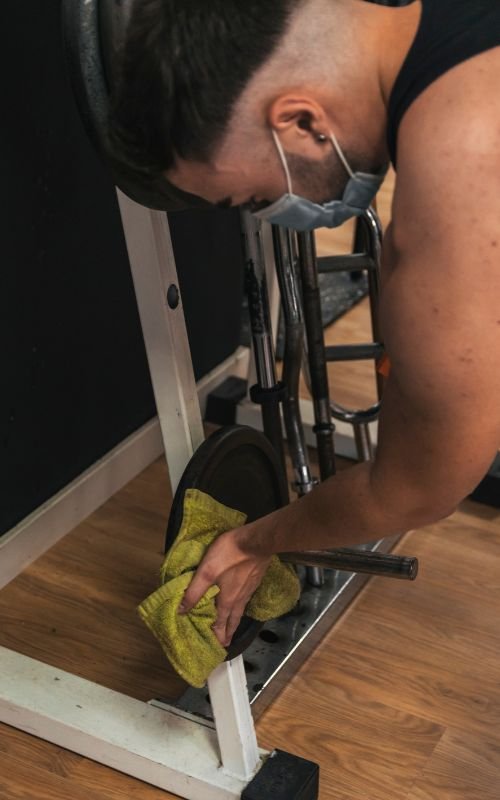
Free weights and resistance equipment touched by multiple users without gloves, rarely cleaned between uses
Rubber gym mats and fitness class flooring warm, porous surfaces that trap moisture and bacteria
Locker room benches and shower floors damp surfaces with direct skin contact
Cardio equipment handles and screens high-touch surfaces throughout the day
Stretching and yoga areas: floor contact with skin and clothing across many users
A spray wipe between classes or at the end of the day does not adequately address these zones. Effective gym cleaning Dublin facilities require is structured by zone, uses appropriate disinfectants for each surface type, and follows a schedule aligned with the gym's opening hours and usage patterns.
What Professional Gym Cleaning Actually Does Differently
The difference between a standard clean and a professional gym cleaning service Dublin operators should use is not just equipment. It is protocol.
Professional gym cleaning uses EN-certified, hospital-grade disinfectants appropriate for each surface type. Rubber, metal, plastic, and fabric surfaces each require different products and contact times. A deep cleaning Dublin service applied to gym flooring uses products effective against bacteria, fungi, and enveloped viruses, not the general-purpose sprays available in retail stores.
Colour-coded equipment prevents cross-contamination between the gym floor, changing rooms, and toilets. Cleaning schedules are aligned with session times so high-traffic areas are addressed at peak intervals, not just at opening and closing. Locker rooms and shower areas receive disinfectant treatment with appropriate dwell time, not a fast surface wipe.
This level of detail is not achievable with in-house staff who have other responsibilities. It requires a team trained specifically in commercial hygiene protocols.
Yes. MRSA is documented as a community-acquired infection, and gym environments are a recognised transmission setting. Any shared surface that contacts broken skin is a potential transmission point. The risk is not limited to gyms with visible hygiene problems. It exists wherever surfaces are not cleaned with hospital-grade disinfectants on a proper schedule.
Free weights, resistance machine handles, gym mats, locker room benches, and shower floors are consistently the highest-risk surfaces. These combine direct skin contact, warm or damp conditions, and high user frequency. Cardio equipment touchscreens and handles are also significant risk points during busy periods.
High-traffic areas such as the gym floor, changing rooms, and shower areas should receive professional cleaning daily. Equipment should be disinfected between sessions throughout the day. A full deep clean of the premises, including behind equipment, under matting, and inside locker units, should be scheduled weekly. Monthly specialist cleaning of rubber flooring and other porous surfaces is also recommended.
No. Standard commercial cleaning services use general-purpose products and standard protocols designed for offices and retail spaces. Gym environments require EN-certified disinfectants effective against bacteria, fungi, and viruses, with documented contact times. The surfaces, the level of contamination, and the frequency of cleaning required in a gym are categorically different from a standard commercial environment.
Dublin gyms carry a documented infection risk from MRSA, staph bacteria, ringworm, and athlete's foot. Research shows bacteria causing skin infections are found on 10% to 30% of gym surfaces. High-risk zones include free weights, rubber mats, locker rooms, and shower floors. Standard cleaning services do not use the correct products or protocols to eliminate these risks. Professional gym cleaning uses hospital-grade EN-certified disinfectants, zone-specific protocols, and schedules aligned with gym usage to protect members and staff. In Ireland, the Health Protection Surveillance Centre provides guidance on MRSA prevention in community settings, which applies to commercial gyms.
The Bottom Line
Gym members in Dublin choose their facility based on equipment, location, and cost. They stay or leave based on how clean it feels. But the infection risks in a poorly cleaned gym go well beyond how the space looks or smells. MRSA, staph, and fungal infections are real community health risks that gym cleaning directly prevents.