A poorly maintained communal hallway does more damage than most property managers realise. It lowers perceived property value, increases safety risks, and can put an Owners Management Company (OMC) in direct breach of Irish law. If you manage a residential block in Dublin and are not working to a documented cleaning schedule, you are already behind.
This guide covers everything a property manager, facilities manager, or management company director needs to know: legal obligations, realistic costs, cleaning frequencies, and what a proper service contract should include.
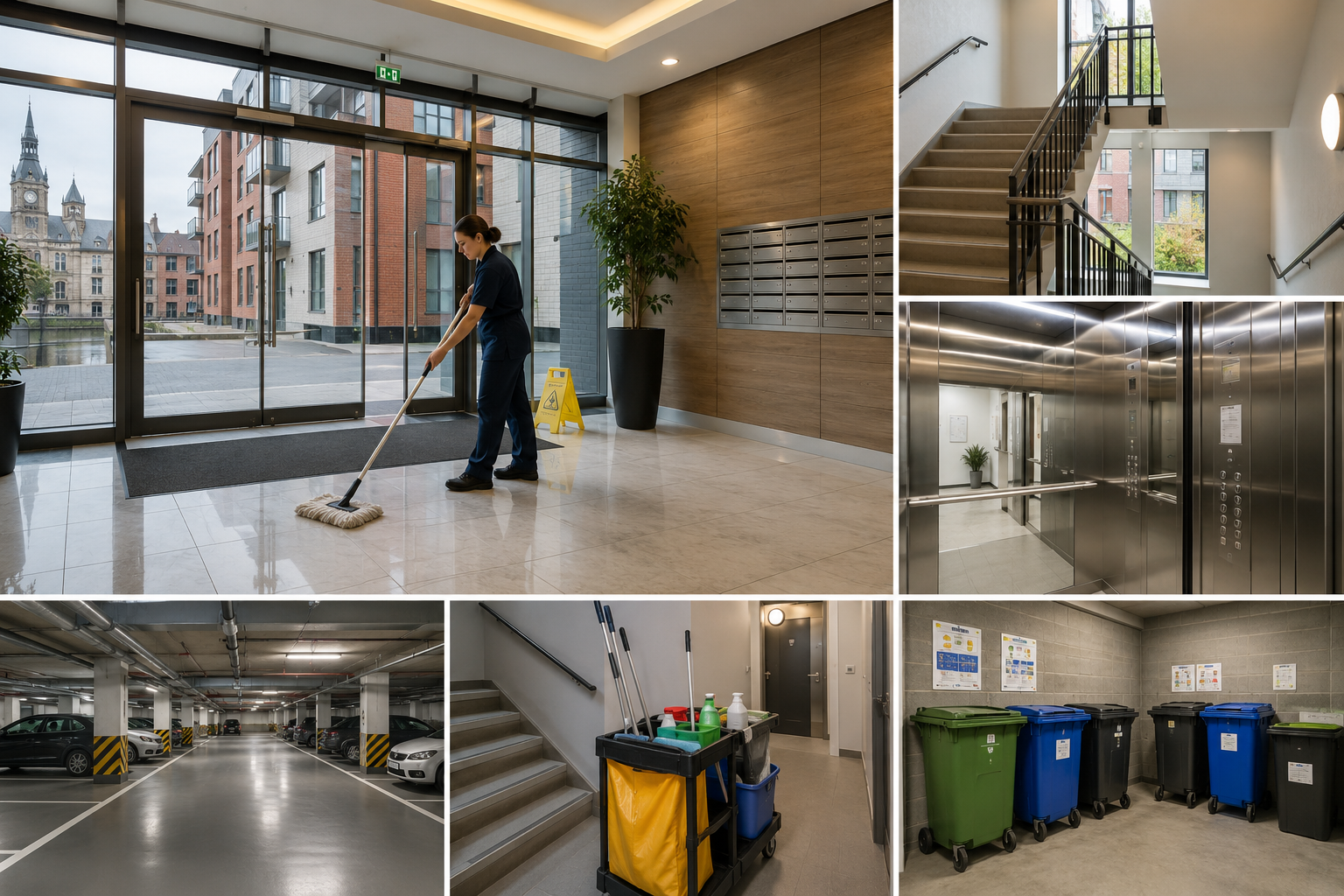
Cleaning shared spaces is not optional. Under the Multi-Unit Developments Act 2011, OMCs have a statutory duty to maintain and manage common areas to a reasonable standard. This responsibility extends to communal hallways, stairwells, lobbies, bin storage rooms, car parks, and lift areas.
Additional obligations arise under the Health, Safety and Welfare at Work Act 2005, which requires safe, hazard-free common areas, and the Fire Services Act 1981, which mandates clear and accessible fire escape routes at all times. Dublin City Council and local authorities may also inspect residential blocks for compliance with waste management and hygiene standards.
Failure to meet these standards can result in formal complaints to the Residential Tenancies Board (RTB), enforcement action, and significant reputational damage for the management company.
Cleaning frequency depends on the block size, footfall, and the specific area involved. However, most well-managed residential buildings in Dublin operate on a tiered schedule.
High-traffic zones such as lobbies, entrance areas, and lift interiors typically require daily or twice-weekly attention. Stairwells and communal hallways are usually serviced two to three times per week. Bin storage rooms need a minimum of weekly deep cleaning to prevent odour buildup and pest risk. Car parks and bicycle storage areas are generally covered fortnightly, while roof terraces and laundry rooms are addressed monthly or on demand.
Seasonal deep cleaning, typically carried out twice per year, covers high-level dusting, window cleaning, pressure washing of external areas, and a full sanitisation of high-touch surfaces such as door handles, lift buttons, and handrails.
Costs vary depending on the size of the development, scope of works, and contract terms. As a general guide for Dublin apartment blocks in 2024 and 2025:
Dublin Communal Cleaning: Typical Cost and Frequency Reference
Area / Service | Typical Frequency | Estimated Cost Range |
Lobby & entrance hall | Daily / 3x per week | €80–€180 per visit |
Stairwells & corridors | 2–3x per week | €50–€120 per visit |
Lift interior | Daily / weekly | €25–€60 per visit |
Bin storage room | Weekly | €40–€90 per visit |
Car park sweep | Fortnightly | €80–€200 per session |
Seasonal deep clean | Twice per year | €400–€1,200 per block |
Cost per unit per month* | All areas combined | €15–€35 approx. |
*Estimate only. Actual costs depend on block size, contract length, and specification.
A cleaning specification document is the foundation of any well-managed contract. Without one, quality standards become impossible to enforce and contractor performance is difficult to measure. A robust Service Level Agreement (SLA) for communal area cleaning in Dublin should cover:
Providers such as Clean 4u offer tailored block management cleaning contracts with documented specifications, allowing property managers to track service delivery against agreed standards.
This is one of the most commonly misunderstood areas of property management. Under Irish law, the OMC holds primary responsibility for maintaining and cleaning common areas. Individual landlords and letting agents are responsible only for the private units they manage, not for shared spaces.
Residents associations may influence cleaning priorities, but the legal and financial duty lies with the OMC or its appointed managing agent. Service charge income collected annually is typically used to fund communal cleaning, maintenance, and insurance. A clear breakdown of how service charges are allocated should be provided to all unit owners each year.
Use this before signing or reviewing any block cleaning contract:
Poor communal area cleaning is one of the fastest ways for a managed development to lose resident confidence, attract complaints, and create legal exposure for the OMC. Getting the contract, schedule, and specification right from the start is not complicated, but it does require attention to detail.
Whether you manage a small block in Dublin 4 or a large development in Fingal County, the principles are the same: documented standards, a realistic frequency schedule, and a contractor who understands the obligations that come with managing residential buildings under Irish law.
WhatsApp us