A vacant rental property is a ticking clock. Every day it sits unoccupied costs you money, but handing over a poorly maintained unit costs you even more. Whether it is a buy-to-let apartment in Dublin 4 or a terraced house in Fingal, the condition of your property between tenancies directly shapes its rental yield, its long-term value, and your legal standing under the Residential Tenancies Act 2004.
Here is what Dublin landlords need to know about cleaning and maintaining their investment property during every tenancy changeover.
Rental property hygiene standards in Ireland are not just about first impressions. A properly cleaned and documented property between lettings protects you in three critical ways:
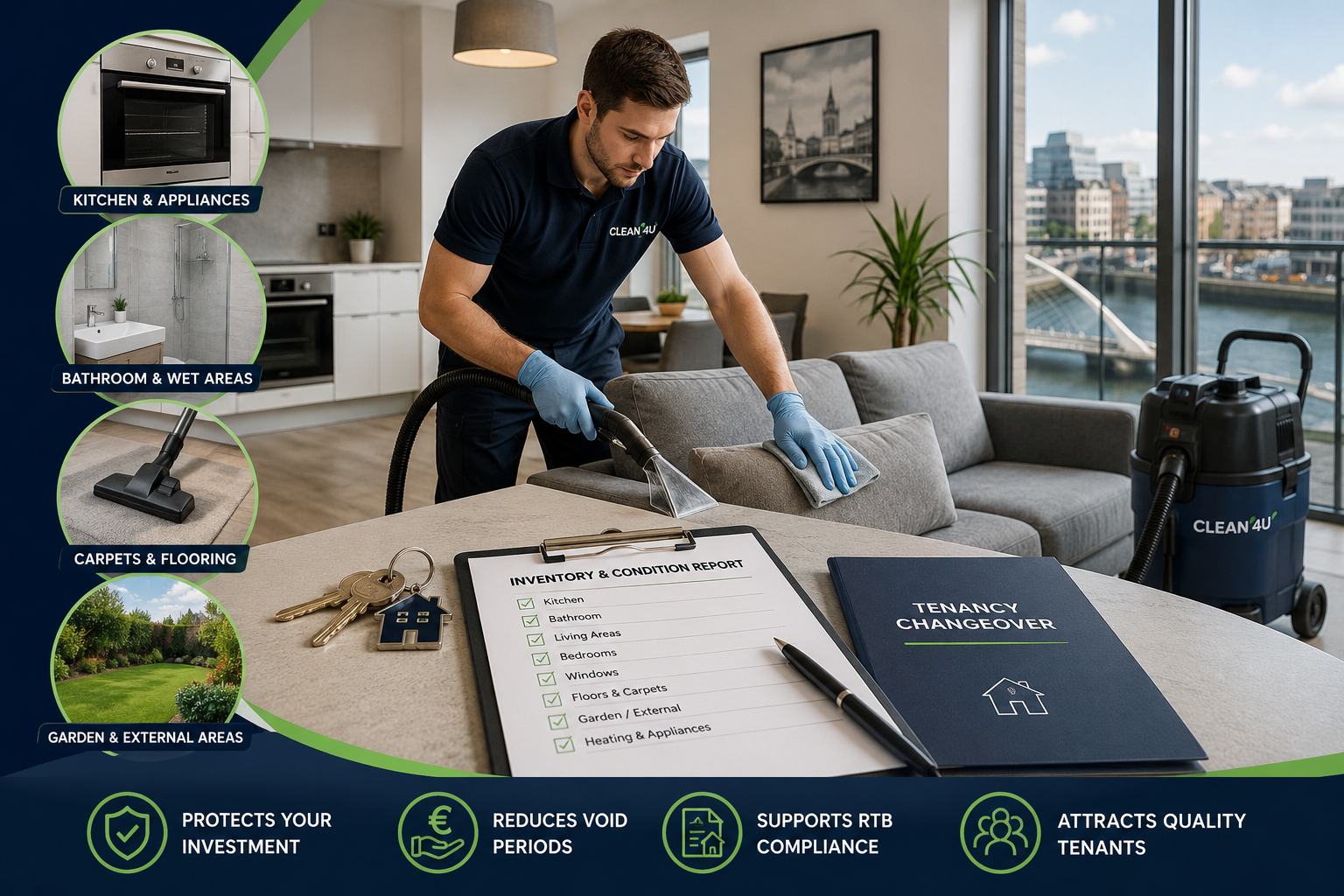
The kitchen is where most tenancy disputes begin. Oven and hob cleaning, extractor fan degreasing, and wiping down inside appliances are often missed by tenants and left to the landlord. Do not overlook skirting boards, cabinet interiors, and behind the fridge.
The kitchen is where most tenancy disputes begin. Oven and hob cleaning, extractor fan degreasing, and wiping down inside appliances are often missed by tenants and left to the landlord. Do not overlook skirting boards, cabinet interiors, and behind the fridge.
Grout and tile cleaning, limescale removal, and checking for mould behind fittings should be standard. Dublin's hard water means limescale builds up fast. Treat it now, before it causes lasting damage.
Carpets and flooring should be professionally treated between tenancies, not just vacuumed. Windows and window sills collect significant grime and condensation residue, especially in Dublin's climate. Addressing condensation and damp before a new tenancy also prevents more costly repairs later.
Managing garden and external areas between lettings in Dublin is often overlooked. Overgrown gardens and blocked drains create liability issues and poor first impressions.
Many landlords attempt a DIY clean between tenancies to cut costs. For a straightforward property this can work, but a deep clean of a rental property in Ireland typically requires professional-grade equipment to meet the hygiene and sanitation standards that protect your investment.
A professional end of tenancy cleaning service like Clean 4U brings a systematic, room-by-room approach with the right tools for oven cleaning, carpet treatment, and bathroom sanitation, ensuring the property meets the standard documented in your inventory report. This also gives you a receipt and record, which is useful if an RTB dispute arises over the deposit.
Under the Residential Tenancies Act, landlords cannot deduct deposit amounts for fair wear and tear. Understanding what constitutes tenant damage versus natural deterioration is essential before you start cleaning or preparing a condition report. Scuffed skirting boards may be fair wear and tear. A grease-coated oven is not.
Documenting the cleaning process with dated photographs alongside your inventory report gives you clear evidence for any RTB dispute resolution process.
Metric | Data / Insight | Source / Context |
Average void period, Dublin rental market | 2 to 4 weeks between tenancies | Industry estimate, Dublin rental market |
RTB dispute cases related to property condition | Cleaning and damage among top dispute categories | RTB Annual Report |
Cost of professional deep clean, Dublin apartment | Approx. EUR 200 to EUR 450 depending on size | Market range, Dublin cleaning services |
Impact of presentation on let speed | Well-presented properties let up to 50% faster | Letting agent industry data |
Mould and damp prevalence in Dublin rentals | Common in properties lacking adequate ventilation | Dublin City Council housing reports |
Deposit disputes, cleaning as a factor | Among the most common grounds for RTB referral | RTB Dispute Resolution data |
Oven, hob, and extractor fan deep cleaned and degreased
All appliances wiped inside and out
Cabinet interiors and skirting boards cleaned
Sink and taps descaled
Grout and tile scrubbed and treated for mould
Limescale removed from all fittings
Extractor fan cleaned and checked
Toilet, basin, and shower tray sanitised
Carpets and flooring professionally cleaned
Windows and window sills cleaned inside and out
Skirting boards wiped down throughout
Mattress and upholstery checked and treated if needed
Garden tidied and drains checked
Boiler and heating system serviced if due
Inventory report updated with dated photographs
Pest prevention check completed
The gap between tenancies is the most important maintenance window a Dublin landlord has. A thorough, documented real estate cleaning service protects your property value, reduces your legal exposure, and sets the standard for the next tenancy from day one.
Skipping this step might save a few hours now, but the cost of a deposit dispute, a void period extended by poor presentation, or premature depreciation far outweighs the investment in getting it right.