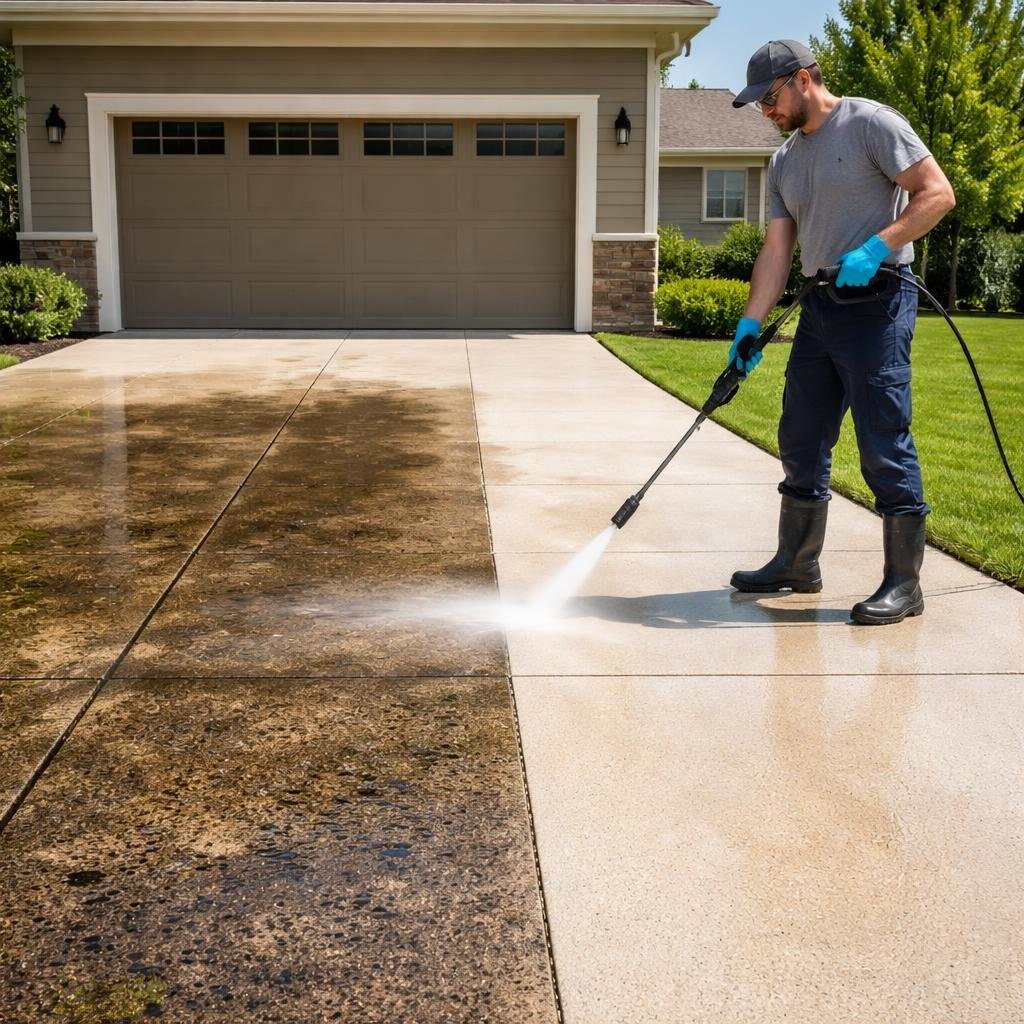
For most homes, power wash your driveway about once a year. If you spot mold, oil stains, heavy dirt, or live in a wet or shady area, you might need to clean more often.
Annual cleaning keeps your driveway looking good and helps stop buildup that can damage the surface.
Watch for dark patches, slippery moss, or visible oil spots—these are signs to act sooner. Simple timing and a few tips can save you time and stretch the life of your driveway.
Key Takeaways
- Aim for yearly power washing, but go for more if you notice stains or growth.
- Weather, driveway type, and how much you use it all affect cleaning needs.
- Tackle stains and slippery spots as soon as you see them to prevent bigger problems.
Recommended Frequency for Power Washing Driveways
Match your cleaning schedule to the driveway material, local weather, and how much traffic it sees. Focus on preventing stains, mold, and surface damage by power washing at practical intervals.
General Guidelines by Driveway Type
Concrete: Power wash once a year to clear oil, tire marks, and algae. Use a 3000–3500 psi machine with a wide nozzle, and keep the wand moving to avoid marks. Treat oil spots or heavy grime as soon as you notice them.
Asphalt: Wash every 12 months, or after winter if you use de-icing chemicals. Asphalt is softer than concrete, so stick with lower pressure (around 1500–2500 psi) and a fan nozzle to avoid damage.
Pavers and brick: Clean every 6–12 months. If weeds or sand loss show up, do lighter cleanings more often. Use moderate pressure, avoid blasting joints, and reapply joint sand after washing.
Gravel or dirt: Skip high-pressure washing—it’ll just scatter gravel. Spot-clean stains or gently rinse after spills. You might need to regrade or top up gravel after cleaning.
Seasonal Considerations
Spring: Clean after winter’s salt and mud build up. This helps prevent stains and surface breakdown. Moss and algae from damp months also come off best in spring.
Summer: Wash in late summer if you see pollen, dust, or oil buildup. Hot, dry weather makes stains set fast, so act when you spot dark or slippery patches.
Fall and winter prep: Power wash in fall to clear leaves and organic matter before freezing temps. Don’t pressure wash during freezing weather—moisture in cracks can freeze and make things worse. If you use de-icers, plan an extra cleaning in late winter or early spring.
Manufacturer and Professional Recommendations
Check your driveway material’s care guide for pressure and detergent limits. Many makers set maximum psi and warn against certain chemicals that can strip sealers or change color.
If you’ve got a sealer, follow the sealer maker’s timing—usually every 2–3 years for resealing after cleaning. Pros usually recommend annual cleaning for concrete and asphalt, and checking pavers twice a year. Hire a pro if you need tough stain removal, high-pressure adjustments, or have drainage and joint repairs. They’ll match pressure, nozzle, and detergent to your surface.
Factors Influencing How Often to Power Wash
Your driveway’s location, how you use it, stain types, and the age and condition of the material all affect how often you should power wash. Seasonal weather, traffic, and surface wear matter too.
Climate and Weather Conditions
Live in a rainy or damp place? You’ll get algae, moss, and mildew faster. These make things slippery, so clean every 6–12 months in wet, shaded spots to stop buildup.
Hot, sunny climates let dirt and dust settle but dry quickly—annual washing is usually enough. In cold areas, salt and grit get into cracks during freeze-thaw cycles. Rinse salt off after winter and consider a spring cleaning.
Near the coast, salt spray speeds up staining and corrosion. Wash two or three times a year if you spot white salt residue or metal stains. Use lower pressure and rinse salt off gently.
Traffic and Usage Levels
Heavy daily use from trucks or work vehicles brings more oil, grease, and grime. If you park work vehicles, plan to power wash every 3–6 months to keep stains from soaking in.
Light family car use? Once a year is usually enough. If you have lots of guests, park many cars, or have kids playing and tracking mud, you might need to wash twice a year.
Use your driveway for auto repair, painting, or gardening? Spot-clean oil and paint quickly, then do a full wash when stains spread.
Types of Stains and Contaminants
Grease and oil are tough to remove—they soak into porous surfaces fast. Use a degreaser and pressure wash within weeks of a spill for best results.
Mold, mildew, and algae grow on shady, damp spots. Use lower pressure and a mild detergent or biocide to kill spores. Treat in spring and again in fall if growth comes back.
Rust, paint, and concrete efflorescence need specific cleaners and careful pressure. Rust usually needs a commercial remover; paint might need special solvents. Always test a small spot first.
Age and Condition of Driveway Material
New concrete or pavers handle cleaning better but can be sensitive to high pressure until cured. Wait 30 days after new pours and use lower pressure during the first year.
Older driveways with cracks or loose pavers can get worse with aggressive washing. Fix cracks and loose joints before washing. Use a gentle setting and skip the rotating nozzle on fragile spots.
Sealed surfaces need less frequent washing, but keep an eye on the sealant. When it peels or fades, power wash to clean, then reseal to protect and cut down on future cleaning.
Signs Your Driveway Needs Power Washing
Check for stains, plant growth, or chemical spots that change color or texture. These problems make the driveway slippery or tough to clean by hand.
Visible Dirt and Discoloration
If your driveway looks dull or has dark patches, dirt and grime probably cover the surface. Run your hand or a stiff broom over a small area—if residue comes off, dirt has packed in.
Edges and spots under cars or trees hold moisture and trap debris, so pay extra attention there. Uneven color—sun-faded next to dark, stained areas—means contaminants are sunk in. Power washing lifts this layer and brings back a more even look.
Moss, Algae, and Weed Growth
Green or black streaks signal moss or algae. They grow in shaded, damp places and hold moisture against the surface. That moisture can freeze in winter, crack the driveway, or make it slick when wet.
Weeds between pavers or in cracks weaken joints and widen gaps. Pulling weeds gets the plant, but not the roots or spores. A targeted power wash clears growth, cleans joints, and shows if deeper repairs are needed.
Oil and Chemical Stains
Dark, greasy spots under cars usually come from oil or fluids. These stains soak into concrete fast. Try scrubbing a small spot with dish soap and water—if it stays, power washing with a degreaser works better than scrubbing alone.
Other chemical stains—like antifreeze or paint—leave stubborn marks. Move fast for the best shot at removal. The longer stains sit, the deeper they go, and the harder they are to clean without pressure washing.
Benefits of Regular Driveway Power Washing
Power washing clears dirt, oil, mold, and stains that pile up over time. It keeps the surface safer, looks better, and helps avoid small problems turning into big repairs.
Enhancing Curb Appeal
Power washing wipes away stains like oil spots, tire marks, and algae that age your driveway. A clean driveway brightens up the whole front yard and bumps up your home’s curb appeal.
You’ll see the color pop between concrete or pavers and your landscaping. Even the house siding and plants look fresher without replacing anything.
If you’re selling or hosting an event, a professional clean can make the driveway look almost new in just a few hours. For DIY, use a fan nozzle and a degreaser on oil spots for best results.
Extending Driveway Lifespan
Dirt, grit, and organic growth act like sandpaper, slowly wearing down the surface. Regular cleaning removes these abrasives and cuts down on surface erosion.
For concrete and asphalt, getting rid of oil and chemicals stops weak spots from turning into bigger damage. For pavers, cleaning the joints stops sand loss so you don’t get shifting or uneven areas.
Stick to a simple plan—once a year for most, twice a year if it’s wet or high-traffic—to cut down on repairs. A little maintenance now usually saves you from expensive resurfacing later.
Preventing Surface Damage
Mold, mildew, and moss trap moisture and can cause freeze-thaw damage in cold climates. Power washing clears this growth and lowers the risk of cracks when water freezes.
Chemical spills and vehicle fluids soak into porous surfaces if ignored, causing stains and breakdown. Treat stains quickly with the right cleaner, then rinse with pressure to keep them from soaking in.
Use the right pressure and nozzle for your driveway material to avoid damage. If you’re not sure, test a small spot or hire a pro to get it right.
Power Washing Tips and Best Practices
Take safe steps, pick the right gear, and choose the best time to wash. Use the right detergent and pressure for your driveway, and decide if you want to hire a pro or do it yourself.
Choosing the Right Equipment and Detergents
Pick a pressure washer with PSI and GPM that match your driveway. For concrete, 3000 PSI works; for pavers or stamped concrete, 1500–2000 PSI is safer. Use a 25–40° nozzle for general cleaning, and a 0° or 15° nozzle only for tough spots—keep your distance.
Use detergents made for pressure washers and labeled for driveways. For oil, grab a degreaser. For mold or algae, pick a biodegradable cleaner with a mild alkaline formula.
Follow label instructions for dilution. Test detergent on a hidden area first. Wear eye protection, gloves, and closed-toe shoes. Keep the wand moving—don’t let it sit in one spot.
Timing and Weather Considerations
Wash when temps are between 45°F and 85°F. Cold can freeze water and mess with detergents; hot, sunny days dry cleaner too fast and cause streaks. Overcast days or cool mornings work best.
Don’t wash before heavy rain—runoff can send detergent into storm drains. Wait a day or two after rain so the surface dries enough for detergent to stick. If algae is a problem, plan cleanings for spring and late fall.
Check your local rules on wastewater before starting. Some places have strict guidelines.
Professional vs. DIY Power Washing
You can save money by doing it yourself if you’ve got the time and can rent the right machine. DIY makes sense for routine maintenance like yearly cleaning, light stains, and standard concrete.
Rent a unit with enough PSI, pick up the right detergent, and always try it out on a test patch first. There’s a bit of a learning curve, but it’s doable.
Call in a pro for heavy oil stains, big areas, delicate surfaces, or if you care about safe wastewater disposal. The pros show up with industrial machines, specialty cleaners, and the know-how to avoid costly mistakes.
Don’t forget to ask for proof of insurance, a few references, and an itemized quote before you say yes.
Frequently Asked Questions
How often should you power wash? It really depends on driveway use, material, and your local weather. There are some clear signs to watch for, and regular maintenance definitely affects how long your driveway will last.
What is the recommended frequency for power washing a residential driveway?
Most people should wash their driveway once a year to get rid of dirt, mildew, and surface stains. If your driveway gets heavy traffic, oil drips, or sits under trees, you might want to do it every six months.
Does the type of material of a driveway affect how often it should be power washed?
Absolutely. Concrete and asphalt are tough enough for yearly cleaning, though asphalt prefers gentler pressure.
Pavers and stamped concrete can go yearly too, but use lower pressure and don’t blast out the joint sand.
Can regular power washing extend the lifespan of a driveway surface?
Regular cleaning gets rid of grime, mold, and chemicals that break down the surface. This helps keep it looking good and slows down wear.
It won’t fix cracks, though—so combine washing with repairs if you want to protect your investment.
What are the signs that indicate a driveway needs to be power washed?
Spot mold, green algae, black streaks, or big oil stains? That’s your cue.
If it feels slippery, looks deeply dirty, or just seems dull and stained, it’s probably time for a wash.
How does climate or weather conditions impact the power washing schedule for driveways?
Humid or rainy weather brings more mold and algae, so you might need to wash every 3–6 months.
If you live somewhere dry and sunny, annual cleaning is usually enough—unless you have lots of traffic or trees dropping stuff everywhere.
Is there an ideal time of year to power wash a driveway for optimal maintenance?
Spring and early fall usually work best. The temperatures feel pretty mild, and that’s when mold and algae seem to grow the most.
I’d steer clear of freezing weather or those blazing hot, sunny days. You’ll get better results and it’s just safer all around.